When the email from HR landed in my inbox, I nearly spilled coffee on my keyboard.
“You’ll be supervising the new interns this year.”
I leaned back in my chair and laughed to myself. Poor souls. Fresh from university, full of confidence, polished CVs, motivational quotes in their bios, and absolutely no idea what real work looked like.
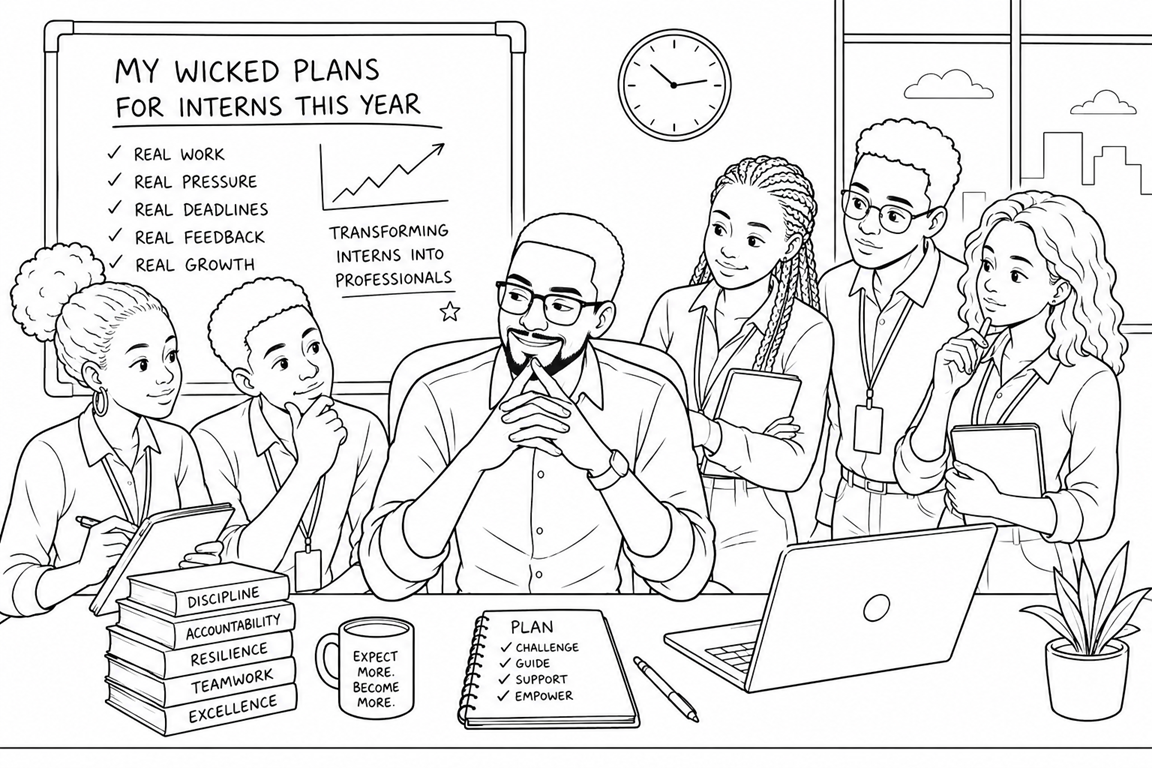
That morning, I started drafting what I jokingly called “my wicked plans for interns this year.”
Not evil exactly. Just… educational.
By Monday, they arrived in groups — nervous smiles, stiff handshakes, overdressed for Kampala heat, carrying notebooks like they were entering a battlefield. I could already tell who thought internship would be easy. One guy asked where the “creative lounge” was before even asking where the washrooms were.
I smiled politely.
Phase one of my wicked plan was simple: reality.
I gave them tasks nobody teaches in university. Calling difficult clients. Organizing chaotic spreadsheets. Sitting through painfully long meetings without sleeping. Fixing mistakes they didn’t make. Explaining things to people who refused to listen. The kind of work that doesn’t appear in motivational LinkedIn posts.
The complaints started quietly.
“This wasn’t in my course.”
“I thought we’d be doing more strategic work.”
“Why is everyone always busy here?”
Exactly.
One intern, Fiona, nearly cried after her third correction on a report. Another disappeared for forty minutes after being asked to call a supplier. A guy named Brian kept saying, “At campus we used AI for this,” as if artificial intelligence could survive our office Wi-Fi.
Still, something interesting began happening after the first two weeks.
The loudest interns became quieter.
The shy ones started asking smarter questions.
They stopped dressing for selfies and started dressing for work.
They were changing.
My second wicked plan was pressure.
Not humiliation. Pressure.
Deadlines.
Responsibility.
Ownership.
I intentionally gave them projects where excuses would fail publicly if they didn’t prepare properly. At first they hated me for it. I heard whispers when I passed by.
“He’s too hard.”
“Why is he always pushing?”
“This place is intense.”
But then the transformation came.
Fiona became the fastest report writer in the department.
Brian learned shortcuts even senior staff didn’t know.
Another intern who barely spoke during introductions confidently presented during a client meeting.
One evening, I stayed late and noticed something unusual.
The interns were still there too.
Not because they were forced to.
Because they finally cared.
That’s when I realized my “wicked plans” were never really about making them suffer. The workplace already does that naturally. My real plan was to remove the illusion early enough before life removed it brutally later.
University teaches people how to pass exams.
Work teaches people how to survive disappointment, pressure, criticism, teamwork, and accountability without collapsing emotionally.
And honestly, internships are where that education should begin.
By the final month, the same interns who arrived timid and entitled now moved around the office like professionals. They anticipated problems before they happened. They spoke carefully in meetings. They respected deadlines. Some even started mentoring newer interns informally.
During the farewell lunch, Fiona stood up holding a soda bottle like a microphone.
“We thought you hated us,” she said while everyone laughed. “But now we understand why you pushed us.”
I smiled but said nothing.
Because the truth was simple:
The world outside school is already wicked enough.
My job was just to prepare them before it introduced itself.